
10 min Read
By Tshikororo Nyandano
Bakkies are tougher and more reliable vehicles as they can adapt too many uses along with a much greater payload. It can be modified easily with 4×4 accessories to improve its capabilities and one of the major benefits is that it will experience little to no depreciation, meaning it will keep its value for years to come. With a lower impact on the environment and still have up-to-date safety features.


Bakkies are designed to carry more payloads and come fitted with bigger wheels with thicker sidewalls for proper off-roading. SUVs are the opposite of that. They have a softer suspension backed up with good levels of handling prowess as well as great performance.
Amongst the current crop of dual-cabs, the 2022 Isuzu D-MAX X-Terrain does a pretty good job across the board and the Ford Ranger Wildtrak X is up to the task when it comes to hard work, but it’s more comfortable showing off at the worksite than actually getting the job done. We all know someone like that.
Ford Ranger Raptor (Gallery)


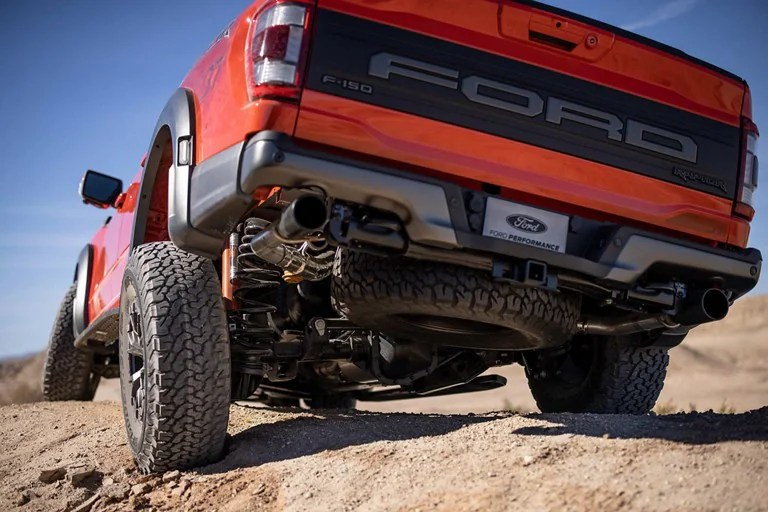


The fuel consumption of 2021 Isuzu D-Max 3.0 4×4 Single Cab MT is 8.3 L/100km. The fuel consumption of 2021 Isuzu D-Max 1.9 4×4 Standard MT is -. The fuel consumption of 2022 Isuzu D-Max 3.0 4×4 X-Terrain AT is 8.3 L/100km. With Ford’s V6 3.0-litre diesel mill instead the Ford performance to fit in their halo V6 3.0-litre twin-turbocharged petrol engine producing 292kW and 583Nm, doubling the power output comparing it with the previous model and adding an extra 83Nm of torque since it was first introduced locally in 2019, with more power than the 2.0-litre bi-turbo diesel with 157kW and 500Nm.
The other engine option for the Wildtrak X is the 2.0-litre Bi-turbo four-cylinder engine producing 157kW of power (at 3750rpm) and 500Nm of torque (1750-2000rpm). That’s class-leading levels of grunt from a four-cylinder engine. It runs a 10-speed automatic transmission and four-wheel drive.
There are two engines on offer in the D-Max range, both are four-cylinder turbo-diesels but of different sizes. Isuzu says that after a combination of open and urban roads the D-Max will use from 6.7L/100km to 8.0L/100km.
Isuzu D’ max (Gallery)


The lower fuel consumption figure is the official Isuzu result for the Crew Cab Ute SX with the 1.9-litre engine and automatic transmission, while the higher mileage applies to most variants with the 3.0-litre engine and auto.
There’s the 3.0-litre making 140kW and 450Nm (4JJ3-TCX), while the other is a 1.9-litre making 110kW and 350Nm (RZ4E-TC).
A six-speed automatic transmission and a six-speed manual gearbox are offered, too, on both engines but not on all grades.
The four-wheel drive Ute range is powered almost exclusively by the 3.0-litre, with the 1.9-litre engine only available on the entry-grade SX. This is new for the 2023 D-Max update.
Throwing an adaptive cruise control with stop and go and lane-centring that bringing the vehicles complete a stop if required, evasive steer assist, blind spot information system with trailer coverage, pre-collision assist with dynamic brake support, forward collision warning, automated emergency braking and reverse brake assist, as well as post-collision braking and you’re pretty much covered for all eventualities.
 Morphy's Gallery